Walls are the largest surfaces in any workplace, and they are the first thing employees and visitors notice. Yet most office budgets go to furniture, flooring, and lighting, while walls are often left as an afterthought.
A well-planned office wall design does far more than add colour. It sets the tone of your brand, improves how a space feels, and supports everyday work through storage, writable surfaces, display areas, and sound control. It can also add privacy between work zones and make a compact room feel brighter and more open.
Even a plain corridor can become an asset when it showcases your completed projects or company milestones. Before choosing colours or materials, define the purpose of each wall. That one step keeps the design practical, polished, and aligned with your business.
How to Choose the Right Wall Design for Your Office
A design studio and an accounting firm shouldn’t have the same walls. Think about who uses each space and what they do there, then decide.
A few things to sort out first:
- Purpose: Is the wall meant to look nice, hold things, carry your brand, or absorb noise?
- Lighting: Lighter finishes help a lot in dim rooms.
- Durability: Corridors get scuffed, so choose surfaces that survive regular cleaning.
- Maintenance: Consider how easy it will be to fix a damaged patch in a year.
- Budget: Look at installation costs, but also at the cost of keeping the wall looking decent.
- Future changes: Offices get rearranged, so avoid finishes that will feel wrong later.
Before choosing anything decorative, mark your desks, doors, power points, and storage on the floor plan. Fixing a wall after the panels are up is never cheap.
Modern Office Wall Design Ideas That Balance Style and Function
You don’t need marble or intricate patterns to achieve a modern office wall design. Usually, a sensible mix of colour, texture, and a few practical details is enough.
Textured finishes
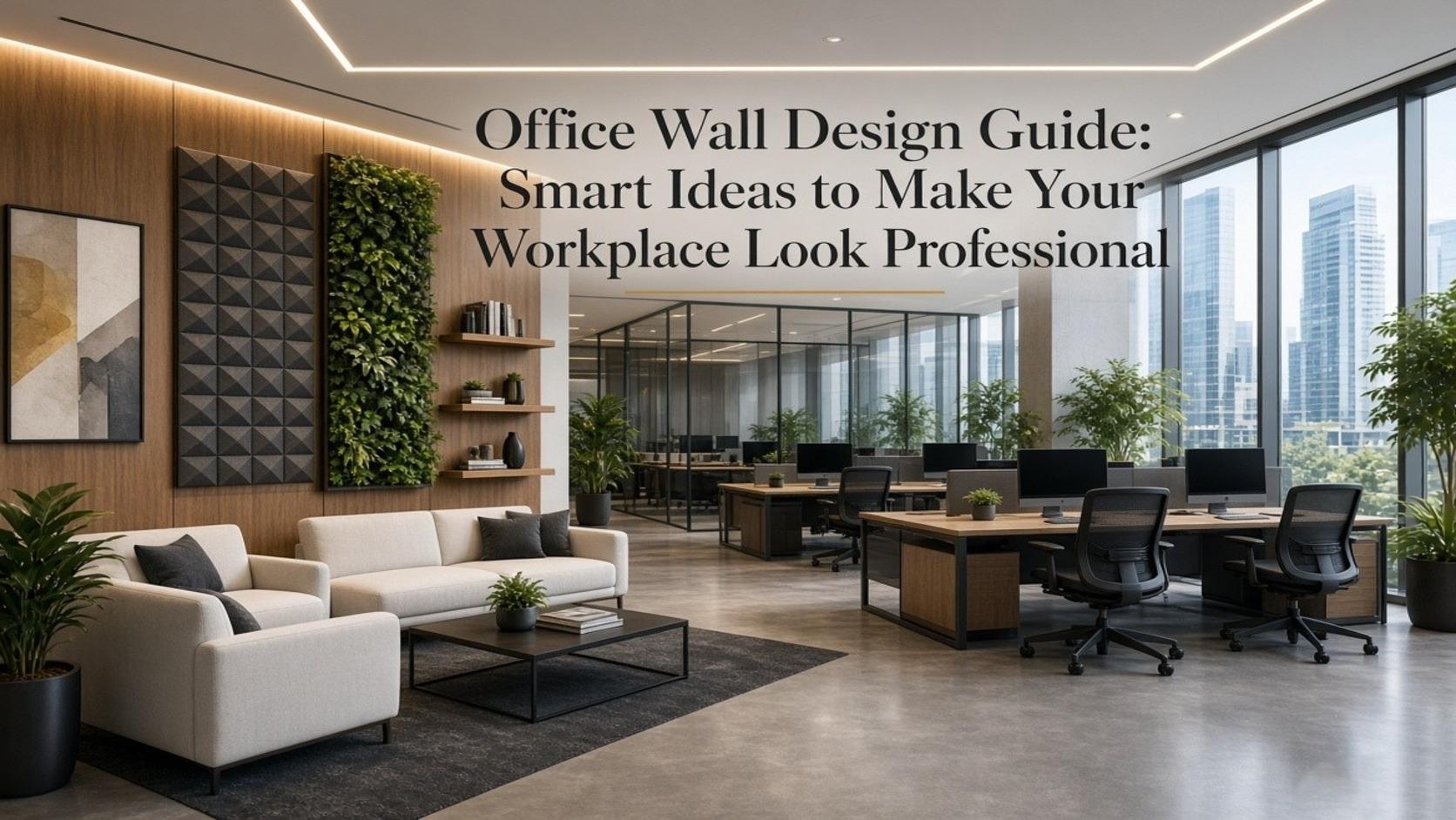
Fluted panels, soft plaster effects, and decorative laminates give a flat wall some depth. They look especially good behind a reception desk.
Feature walls
One wall that stands out through colour, material, or pattern gives the eye somewhere to settle. Choose a single wall and keep the others calm, because when every wall shouts, none of them stands out.
Natural-looking materials
Wood tones, stone textures, and earthy colours make an office feel warmer. If real materials stretch your budget, good laminates can get you close.
Functional features
Whiteboards, display screens, and built-in storage earn their place, especially where teams collaborate.
Choose what suits your layout and the way your people actually work, rather than whatever is trending this season.
Office Reception Wall Design: Making a Strong First Impression
Visitors form an opinion about your company within moments, and they do it standing in your reception. The wall behind the desk is usually what they’re looking at.
A strong office reception wall design shows who you are without overloading the entrance.
Some things to get right:
- Company logo: Put it where people see it as they walk in.
- Suitable materials: Make the wall finish work with the desk and the floor.
- Lighting: Light the logo or texture, but watch for glare.
- Simple branding: One clear message beats five.
- Practical access: Plan power and maintenance access before anyone starts drilling.
In a small office, a clean backdrop, a well-placed logo, and warm light are plenty. A bigger reception can carry textured panels or a well-chosen piece of artwork. Restraint almost always looks more professional than decoration piled on decoration.
Office Wall Panel Design: Materials, Benefits, and Best Uses
A well-chosen office wall panel design can add texture, protect a hard-working surface, and hide certain services. What suits you depends on the room, your budget, and how much upkeep you can manage.
| Material | Suitable application | What to consider |
|---|---|---|
| Decorative laminate | Reception and feature walls | Durability and easy cleaning |
| MDF panels | Dry indoor spaces | Moisture protection and fire-rated specifications |
| Natural wood | Executive offices | Cost and maintenance |
| Acoustic panels | Meeting rooms and open offices | Tested sound-absorption performance |
| Paint | General office walls | Affordable and easy to refresh |
| Stone or stone-look finishes | Selected feature walls | Weight and installation costs |
When are panels worth the investment? They’re worth it when you want a distinctive finish, extra protection, or better acoustics. They aren’t necessary on every wall, so if your existing surfaces are in good condition, leave them alone.
A good-looking panel isn’t automatically a sound barrier or fire resistant. If your space has technical requirements, buy properly tested products and make sure the installation meets the relevant safety standards.
Office Interior Wall Design for Different Work Areas
Good office interior wall design treats your office as a handful of small spaces, each with its own job. The walls should match.
Workstations
Keep colours easy on the eyes and decoration minimal. A pinboard lets people personalise their spot without making the floor look untidy.
Meeting rooms
Screens, writable surfaces, and sound comfort come first. Skip glossy finishes that bounce light into people’s eyes.
Corridors and shared spaces
People brush past these walls all day, so tough paint and protective finishes keep them looking decent.
Breakout areas
This is where you can loosen up. Artwork, photos, and bold colours make a casual area feel welcoming.
Private offices
Plan for shelving, awards, and what shows up behind someone on a video call.
When these choices are made together, the office feels like one place even though each area works differently.
Office Wall Decoration Ideas That Go Beyond Paintings
The best office wall decoration ideas don’t involve hanging something on every blank wall. A few meaningful pieces do more than a pile of random objects.
Some ideas that tend to work:
- Company milestones: Photos of finished projects, achievements, and key moments in your history.
- Framed artwork: Pieces that pick up the colours already in the room.
- Writable surfaces: A whiteboard gets used far more than a poster ever will.
- Display shelves: A few books, an award, or a meaningful object.
- Green elements: Preserved greenery, or real plants if the room gets enough light.
- Clear signage: Readable room names and directions that visitors will appreciate.
Before hanging anything, check that it won’t block a socket, a light fitting, or a walkway. If an item makes the office neither more useful nor friendlier, a plain wall is perfectly fine.
Choosing the Right Colours, Lighting, and Textures
Colour and light affect mood more than most people expect. Get them right and a room can feel brighter, calmer, or livelier.
Warm white, beige, and light grey are safe backgrounds that work almost anywhere. Muted blues and greens add colour without taking over, and a stronger shade can look great on a feature wall.
A few rules of thumb:
- Use lighter finishes in rooms with little natural light.
- Keep strong colours to a few areas.
- Test samples on the actual wall, because colours look different once they’re up.
- Position lights to show off texture without causing glare.
- Match wall finishes with your furniture, flooring, and brand colours.
Give lighting extra attention around logos, artwork, and textured panels. A good fixture shows every detail, while a badly placed one throws shadows and reflections across it.
Common Wall Design Mistakes and How to Avoid Them
A wall can look wonderful and still be a pain to live with if nobody thought about the practical side.
- Using too many feature walls: When every wall has its own colour or pattern, the office feels busy. Pick a couple of focal points and keep the rest quiet.
- Ignoring acoustics: Hard surfaces bounce sound around. In noisy offices and meeting rooms, look at tested acoustic treatments.
- Choosing materials only for appearance: A delicate finish may look lovely in a showroom and fall apart in a busy corridor. Check how it holds up and how it’s repaired.
- Forgetting electrical requirements: Decide where screens, switches, data points, and lights go before the panels are fixed in place.
- Following trends without considering the business: Your office should fit your organisation, not just resemble a photo you saw online.
- Overlooking maintenance: Find out how a damaged panel is replaced and whether paint can be touched up without a visible patch.
Sorting these out early is far cheaper than fixing them later.
How to Plan Your Office Wall Design Within Your Budget
An attractive workplace doesn’t mean redoing every wall. Spend where people will notice and where the walls do the most work.
Build a budget that includes materials, labour, surface preparation, lighting, electrical work, and some room for surprises. When you collect quotes, ask each contractor to spell out what’s included so you can compare them properly. Reception, meeting rooms, and shared areas should come first, and the walls hardly anyone sees can wait.
Practical ways to control costs
- Keep walls that are already in good condition.
- Use premium materials on a few feature walls and simpler finishes elsewhere.
- Compare maintenance costs, not just installation costs.
- Stick to standard panel sizes where possible to reduce waste.
- Finish electrical and preparation work before the final finishes go on.
Be wary of choosing the lowest quote just because it’s the lowest. Check the material specifications and the quality of the workmanship, because a cheap job that needs repairs soon after isn’t cheap. Before giving the go-ahead, review the design against your office layout and confirm the colours, panel positions, lighting, and branding.
Final Thoughts
Walls shape how an office looks, but they also affect how it works. Choose them carefully and they can organise your work areas, welcome visitors, make the place more comfortable, and show people what your company is about.
Begin with how each area will be used, and let that guide your colours, materials, and decoration. Whether you’re exploring simple office decoration ideas for a small workspace or planning a full commercial interior, the goal is the same: a space that looks professional and is easy to work in.
If it feels like a lot to coordinate, an experienced interior design team can bring the wall finishes, lighting, furniture, and installation together for you. Put in some thought now, and your office should stay good-looking and easy to maintain for years to come.
FAQ’s
Why is office wall design important?
Walls are the largest surfaces in a workplace, so they shape how it looks and feels. Good design supports your brand and adds storage, privacy, and sound control.
How do I choose the right wall design for my office?
Start with how each space is used. Then consider lighting, durability, maintenance, budget, and future layout changes.
What are some modern office wall design ideas?
Textured finishes, a single feature wall, and natural-looking wood or stone tones work well. Whiteboards and built-in storage add practical value.
What should I include in an office reception wall design?
Include a clear company logo, finishes that match the desk and flooring, and soft, glare-free lighting. Keep the branding simple.
Which materials are best for office wall panels?
It depends on the room. Laminate suits reception areas, wood suits executive offices, and acoustic panels suit meeting rooms. Paint is the easiest and most affordable option.
Do decorative wall panels provide sound insulation or fire protection?
Not automatically. Choose properly tested products if you need acoustic or fire performance.
How should wall design differ across work areas?
Match each wall to its purpose. Workstations need calm colours, meeting rooms need writable surfaces and acoustic comfort, and corridors need durable finishes.
What are some office wall decoration ideas beyond paintings?
Try company milestones, framed artwork, whiteboards, display shelves, greenery, and clear signage. If an item serves no purpose, a plain wall is fine.
What colours work best for office walls?
Warm white, beige, and light grey suit most offices. Muted blues and greens add colour without taking over. Always test samples on the actual wall.
How can I keep my office wall design within budget?
Focus on the reception, meeting rooms, and shared areas first. Keep walls that are in good condition, and compare maintenance costs along with installation costs.